

Media providers need dependable ways to distribute television, radio and digital content across cities, countries and remote regions. Satellite broadcasting remains an important part of modern media delivery because it can transmit content across wide geographical areas without relying entirely on terrestrial cables or local network infrastructure.
For broadcasters, telecommunications providers, government organisations and media platforms, satellite systems can support national distribution, direct-to-home television, live event coverage and communication between separate broadcast facilities.
Reliable content delivery, however, involves more than sending a signal to a satellite. The complete platform must be properly designed, integrated, tested, monitored and maintained.

What Is Satellite Broadcasting?
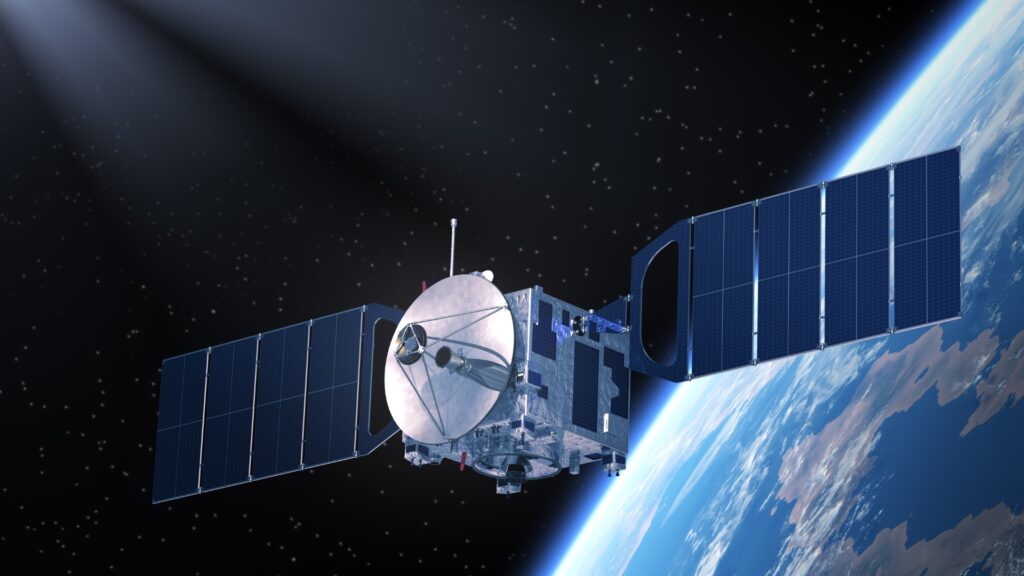
Satellite broadcasting is the transmission of television, radio, video or data from an earth station to a communications satellite.
The satellite receives the signal and sends it back towards a defined coverage area on Earth. The signal can then be received by satellite dishes, broadcast facilities, distribution centres or individual subscribers.
This makes satellite broadcasting suitable for reaching audiences across large areas, including locations where fibre, cellular and terrestrial broadcast infrastructure may be limited.
One of the most familiar applications is satellite television, but satellite technology can also support content contribution, network linking, disaster recovery, corporate communication and live broadcasting.
How Does Satellite Broadcasting Work?
A professional satellite broadcasting system contains several connected stages.
Content may originate from television studios, newsrooms, production systems, live events or external content providers. Before transmission, the content must be prepared, encoded and organised.
The content then enters a broadcast head-end, where signals may be:
- Encoded and compressed
- Combined into a multiplex
- Encrypted or protected
- Monitored for quality
- Prepared for satellite transmission
An uplink station sends the prepared signal to the selected satellite. The satellite relays the signal across its coverage footprint, where receiving equipment converts it into content that can be viewed, redistributed or added to another media network.
AUCOM SA provides Direct-to-Home satellite solutions that can include head-end design, satellite capacity planning, conditional access, subscriber delivery and platform integration.
Why Satellite Broadcasting Remains Important
Internet-based and terrestrial delivery methods continue to develop, but satellite broadcasting still offers important advantages for organisations that need to reach large or widely dispersed audiences.
Wide Geographical Coverage
A satellite footprint can cover broad regions without requiring physical cable infrastructure to reach every receiving location.
Access to Remote Areas
Satellite services can reach rural and remote locations where terrestrial broadcasting, fibre or cellular coverage may be unavailable.
Simultaneous Content Distribution
The same television, radio or data service can be distributed to many receiving sites at the same time.
Support for Network Resilience
Satellite links can provide an alternative content distribution route when fixed or terrestrial networks experience disruptions.
Scalable Media Delivery
A properly designed platform can support multiple television channels, radio stations, data services and regional feeds.

Common Uses of Satellite Broadcasting
| Application | How Satellite Broadcasting Supports It |
|---|---|
| Direct-to-home television | Delivers television channels directly to subscribers using satellite receiving equipment. |
| Content contribution | Transfers live or recorded content from an event, studio or remote location to a broadcast centre. |
| Content distribution | Sends complete channels and programme feeds to broadcasters, transmitters and regional stations. |
| Broadcast network linking | Connects studios, head-ends, transmission sites and control centres in different locations. |
| Backup content delivery | Provides an alternative distribution route when terrestrial or fixed networks are interrupted. |
The Role of the Broadcast Head-End
The broadcast head-end is a central part of a satellite platform. It receives content from multiple sources and prepares it for secure and efficient transmission.
A head-end may include:
- Satellite and terrestrial receivers
- Video and audio encoders
- Multiplexers
- Conditional access systems
- Content monitoring tools
- Network management systems
- Uplink transmission equipment
These components must operate together without introducing signal errors, excessive delays or service interruptions.
Professional system integration and testing is therefore essential. Equipment from different manufacturers must be correctly configured, connected to the wider broadcast environment and tested under realistic operating conditions.
Satellite Broadcasting and Playout Systems
Satellite infrastructure does not operate separately from the rest of a media organisation.
Content must pass through production, scheduling and playout workflows before it can be distributed. Playout systems control programme schedules, live feeds, channel branding, advertising and recorded content.
Media asset management systems also help broadcasters store, organise and retrieve the video, audio and graphics required for transmission.
The final programme output is sent from the playout environment to the head-end, where it is prepared for satellite delivery.
Integrating satellite infrastructure with production and playout systems helps create a more efficient workflow and reduces gaps between content preparation and final transmission.
Planning a Reliable Satellite Broadcasting Platform
Reliable satellite content delivery begins with careful planning.
A platform must be designed around the type of content being transmitted, the required coverage area, the number of services, the expected audience and the receiving equipment being used.
Important planning considerations include:
- Satellite capacity
- Coverage requirements
- Frequency selection
- Antenna specifications
- Link budget calculations
- Signal redundancy
- Encoding and compression standards
- Conditional access
- Monitoring and control
- Uplink and receiving-site conditions
The system should also account for future growth. Broadcasters may need to add channels, increase coverage, introduce new formats or connect the satellite platform to OTT and IPTV services.
Redundancy and Continuity
Broadcasting platforms are expected to operate continuously. A failure in an encoder, uplink, antenna, power supply or network connection can interrupt content delivery across many receiving locations.
Redundant equipment and alternative signal paths can reduce the impact of individual component failures.
Depending on the platform, redundancy may be added to:
- Encoders and multiplexers
- Uplink equipment
- Power supplies
- Network connections
- Monitoring systems
- Playout servers
- Signal reception equipment
Backup systems must also be tested regularly. Equipment that is installed but never tested may not respond correctly during an actual service interruption.
Monitoring, Maintenance and Technical Support
Satellite broadcasting systems require ongoing monitoring and maintenance.
Technical teams must be able to identify signal degradation, equipment faults, network problems and changes in platform performance before they lead to wider service interruptions.
Preventative maintenance may include equipment inspections, signal testing, software updates, antenna checks and system health reviews.
AUCOM SA’s managed services can support network monitoring, maintenance, incident management and performance reporting. Access to 24/7 technical support is also valuable for broadcast and communication systems that cannot afford extended downtime.
Building an Integrated Satellite Broadcasting System
Reliable satellite broadcasting depends on the complete system working as one connected platform.
The head-end, uplink, antenna systems, playout environment, transmission equipment, monitoring tools and support processes must all be properly integrated.
A professional system integration partner can assist with:
- Requirement analysis
- Platform architecture
- Equipment selection
- Head-end design
- Installation and configuration
- Testing and commissioning
- Documentation and training
- Monitoring and maintenance
- Ongoing technical support
AUCOM SA supports broadcasters, telecommunications providers, media organisations and public sector operators with the supply, integration and support of broadcast and digital multimedia platforms.
By considering the entire system rather than treating each component separately, organisations can improve reliability, simplify daily operations and develop infrastructure that supports long-term content delivery.
For media providers planning a new satellite platform, expanding an existing service or improving network resilience, professional integration provides a strong foundation for dependable content distribution across South Africa and Southern Africa.
“`html “`